Guide to the Floating Gardens of Xochimilco
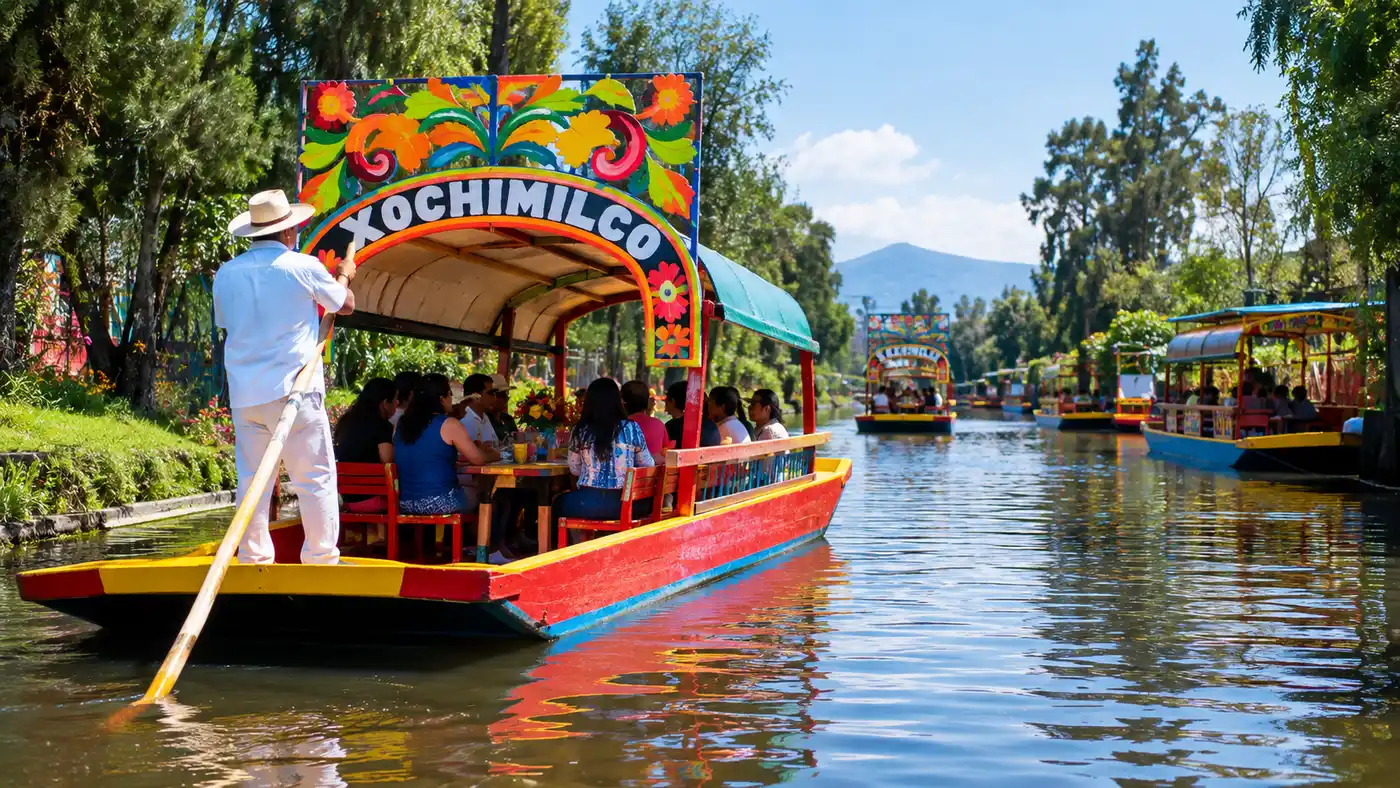
Most travelers imagine Mexico City as an endless sea of concrete, roaring traffic, and towering apartment blocks. Yet about 17 miles south of the historic center lies a labyrinth of willow-lined waterways where wooden boats drift past ancient agricultural plots. Visiting the floating gardens of xochimilco feels like slipping through a hidden side door into the Valley of Mexico as it existed centuries ago. The air smells of wet earth, roasted sweet corn, and canal water, with the occasional brassy blast of a mariachi trumpet echoing off the trees.
Getting out here is one of the strangest, liveliest, and most grounding day trips you can take in the capital. You can spend an afternoon clinking cold bottles of Victoria with friends on a neon-painted barge, or you can paddle out at dawn when mist hangs over the water and egrets hunt in the shallows. This guide covers how the canal system works, what to expect on the water, what it actually costs, and how to tell the party zones from the quiet rural reaches.
Book your xochimilco boat tour experience:
The Aztec Roots of the Floating Gardens of Xochimilco
The name is a bit of a trick. The floating gardens do not actually float, and they never really did. Centuries before the Spanish arrived, the indigenous farmers of the Valley of Mexico faced a massive problem: they had very little dry, flat land to farm on, but they had vast, shallow freshwater lakes. Their solution was an engineering marvel called the chinampa.
To make a chinampa, farmers wove dense mats of reeds and juniper branches, anchored them to the shallow lake bed with stakes cut from local *ahuejote* (water willow) trees, and piled nutrient-dense mud scooped straight from the bottom on top. Over time, those willow stakes took root in the mud. The roots stabilized the rectangular plots of soil, turning them into permanent artificial islands ringed by water. These xochimilco canals were simply the waterways left between the plots, functioning as roads for canoes laden with beans, squash, flowers, and maize.
At their peak, chinampas produced up to seven harvests a year. They fed Tenochtitlan, the Aztec capital that once sat where the Zócalo stands today. When the Spanish conquered the city in 1521, they chose to drain Lake Texcoco and the surrounding lake basin rather than maintain the waterworks. Lake Xochimilco Mexico City is one of the few surviving fragments of that immense aquatic ecosystem. UNESCO recognized the cultural value of the chinampa network in 1987, granting it World Heritage status, though keeping these canals in Mexico healthy remains an uphill ecological fight.
Today, these islands still produce crisp radishes, lettuces, and aromatic herbs for high-end restaurants in Roma and Condesa. Other plots grow seasonal marigolds for Day of the Dead or bright red poinsettias for Christmas. Seeing farmers working the dark soil with hoes while wooden punts drift past reminds you that this aztec canal network was built for survival long before it became a place to drink beer on a Saturday.
Two Very Different Canal Experiences
Depending on which pier you choose and what time you show up, the canals of Xochimilco can feel like an open-air nightclub or a quiet wildlife sanctuary. I made the mistake on my first trip of expecting a meditative, spiritual commune with nature at two in the afternoon on a Sunday. Instead, I was wedged between a boat full of university students blasting reggaeton through a portable amplifier and an extended family singing along to three floating accordion players. It was wildly fun, but it was not serene.
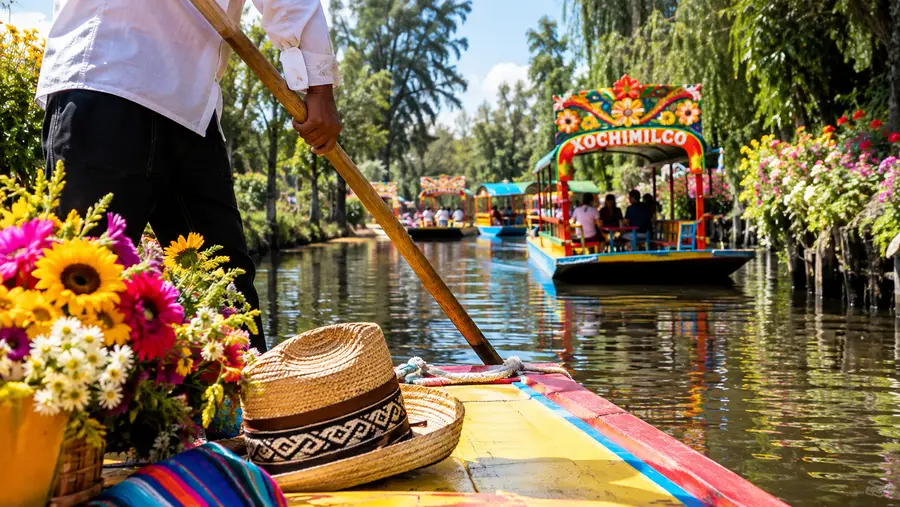
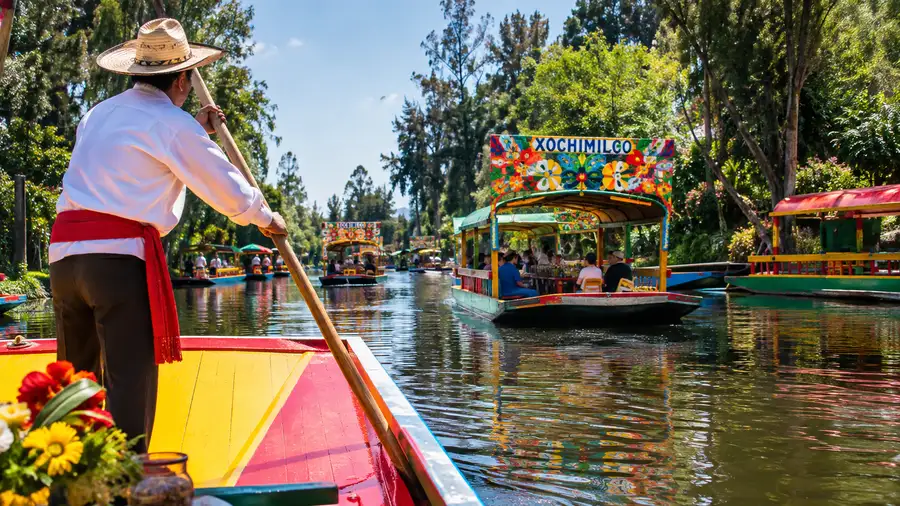
The party stretch runs primarily along the northern canals, centered around busy piers like Embarcadero Nuevo Nativitas and Embarcadero Las Flores. Here, the mexico city river boats - known locally as trajineras - bumper-car into each other as punters steer them down congested water lanes. Floating vendors pull alongside your boat to grill arrachera steak, hawk silver jewelry, or sell buckets of chilled beer. You can hire a floating marimba band to pull up alongside your boat and play a song for 150 to 220 pesos while you eat warm tlacoyos wrapped in paper napkins.
Pro tip: If you want the quiet, ecological side of the canals, book a sunrise tour or head out from Cuemanco before 9:00 AM on a weekday when the water is mirror-flat and the migratory pelicans are feeding.
South and east of the party corridors lies the ecological reserve. The canals here narrow down considerably. The willow canopies meet overhead, filtering the sunlight into emerald ribbons across the water. You will see herons, kingfishers, and maybe even researchers checking in on the critically endangered axolotl, the strange, neotenic salamander native to these waters. It feels thousands of miles removed from the urban roar of the capital.
Embarcaderos, Boat Prices, and Avoiding Scams
Choosing where you launch shapes your entire day. There are ten main embarrassingly named launch points (embarcaderos) scattered around the municipality. Some cater strictly to loud social gatherings, while others serve farmers, kayakers, and travelers headed out toward the ecological side or the famous, creepy Island of the Dolls (Isla de las Muñecas).
| Embarcadero | Vibe | Main Draw | Best For |
|---|---|---|---|
| Nuevo Nativitas | Loud, crowded, festive | Large craft market, easy parking, endless food boats | Groups, parties, first-timers |
| Cuemanco | Quiet, nature-focused | Access to ecological reserve and axolotl sanctuaries | Birdwatchers, sunrise trips |
| Belem / Salitre | Traditional, local | Shorter loops, closer to Xochimilco town center | Quick visits, lower crowds |
| Fernando Celada | Mixed, community-oriented | Historic boat launch, links to older residential canals | Couples, relaxed afternoons |
Official pricing for hiring a boat on the canals in Mexico City is set by the local government at a flat rate of 600 pesos per hour, per boat. That is not per person. A boat fits up to 18 to 20 people comfortably around its long wooden table, meaning a family or group pays the exact same hourly rate as a solo traveler. You pay the boatman directly before departing or upon return, depending on the pier.
Note: Ignore the men on bicycles who flag you down on the streets leading to the piers claiming the docks are closed or offering to guide you to special boats - they are touts who add an aggressive middleman markup.
When planning how to get to Xochimilco, remember that traffic out of central Mexico City can be brutal. An Uber from Condesa or Roma will take around 50 to 80 minutes depending on whether you leave during rush hour. If you take public transit, ride Metro Line 2 to the southern terminus at Tasqueña, then transfer to the Tren Ligero (light rail) down to the final stop at Xochimilco. From the station, the closest piers are about a 12-minute walk through the market streets.
Book your xochimilco boat tour experience:
What to Eat, Drink, and Buy Along the Water
You do not need to pack a picnic, though you are welcome to bring your own cooler filled with beer, mezcal, chips, and limes. The food culture along the floating garden Mexico City routes is half the joy of the outing. Independent vendors paddle narrow, low-slung wooden canoes right up to the gunwales of your trajinera to sell freshly prepared Mexican street food.
You will smell the charcoal stoves before you see them. A woman will pull alongside, tie off her canoe with a rope, and hand over steaming ears of fresh corn slathered with mayonnaise, cotija cheese, and chili powder. Others carry clay pots of *carnitas* or fold blue-corn quesadillas stuffed with squash blossoms and melted Oaxaca cheese over small gas burners. The quality is surprisingly high because many of these families have been cooking the same three dishes for generations.
Before stepping onto the dock, make sure your bag is stocked with essentials:
- Small peso bills: Vendors and musicians on the water cannot break 500-peso notes, so bring a stack of 20s, 50s, and 100s.
- Reusable water bottle: You will be sitting in the direct sun for hours, and dehydration hits fast at 7,300 feet of elevation.
- Light rain jacket: Afternoon thunderstorms roll off the southern volcanic ranges suddenly between May and October.
- Hand sanitizer: Finger food on a boat with no running water calls for clean hands before eating.
- Sun protection: Even with canopy roofs on the boats, the high-altitude glare off the canal water burns skin quickly.
Beer vendors paddle by offering micheladas served in massive plastic cups rimmed with sticky tamarind paste and Tajín. If you want something genuinely traditional, look for the guys selling pulque from five-gallon jugs. This viscous, fermented maguey sap has been drunk along these canals since pre-Hispanic times. It has a tangy, slightly sour flavor, often blended with crushed strawberries, celery, or oats to make a *curado*.
Choosing Your Route and Timing
Before the boatman unties the mooring rope, you must tell him how many hours you want to spend on the water. A standard spin along the canal Mexico City route takes around two hours, which gives you plenty of time to eat, listen to music, and soak up the energy without getting restless. If you want to reach the stranger sights deeper in the wetlands, you need to budget more time.
The infamous Isla de las Muñecas sits deep in the southern canals. It was created by a hermit named Don Julián Santana Barrera, who began collecting discarded plastic dolls from the canals and hanging them from the trees to ward off the spirit of a drowned girl he believed haunted the island. Decades of weather have left hundreds of decaying, moss-covered doll heads staring from the branches. Reaching the real island requires at least a four-hour round trip, so do not let a tout at an urban dock convince you that a one-hour boat ride includes a visit to the authentic site.
Here is how to match your schedule to the experience you want:
- Early morning (7:00 AM to 9:30 AM): Ideal for birdwatching, photography, and exploring chinampa agriculture when the water is silent and calm.
- Midday weekdays (11:00 AM to 2:00 PM): Great for a relaxed lunch with friends; the canals are active enough to find musicians and snacks without chaotic boat traffic.
- Weekend afternoons (1:00 PM to 6:00 PM): Pure sensory overload with booming brass bands, birthday parties, dancing on the tables, and hundreds of vibrant trajineras.
- Sunset runs (5:00 PM to 7:00 PM): Beautiful golden light catching the willow leaves, though bring layers because temperatures drop sharply once the sun dips behind the mountains.
For those interested in the vessels themselves, reading an in-depth guide to Xochimilco trajineras gives you context on how these heavy flat-bottomed boats are built from pine and oyamel wood, and why each one carries a woman's name spelled out in painted flowers arching over the front seat.
Frequently Asked Questions about floating gardens of xochimilco
Are there bathrooms available on the canals?
Yes, but not on the boats themselves. Along the main tourist routes, several waterfront properties run private restrooms for 5 to 10 pesos. You simply tell your boatman you need to use the bathroom, and he will pull up to a landing so you can hop off.
Is it safe to visit Xochimilco as a tourist?
The boat tours and primary tourist docks are generally safe for visitors during daylight hours. Keep an eye on your phone and wallet in the crowded market areas around the docks, avoid wandering deep into unfamiliar residential neighborhoods after dark, and do not drink so much that you fall off the boat.
Can you visit the floating gardens without a guided tour?
Absolutely. You do not need to book an expensive third-party tour operator in advance. You can simply take a taxi or the light rail directly to an official embarcadero, walk up to the ticket window or boat dock, pay the official hourly rate, and push off into the water.
Quick Reference
- Official price: 600 pesos per boat per hour
- Operating hours: 9:00 AM to 6:00 PM daily
- Typical rental: 2 to 3 hours
- Best transit: Uber or Metro Line 2 to Tren Ligero
Book your xochimilco boat tour experience:
Is It Worth It?
Spending half a day on the water in southern Mexico City is easily one of the most memorable things you can do in the capital. It can be rowdy and slightly ridiculous if you end up in the middle of a floating bachelor party, or surprisingly tender when you watch three generations of a local family passing around tamales to the soundtrack of an acoustic guitar trio. Walk straight past the touts on the street, head down to the water, step onto the painted wood, and let the boatman push you out into the reeds.
Read more about xochimilco boat tour.